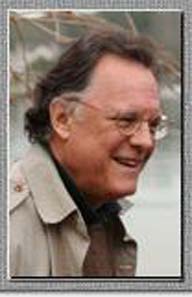
On Prophecy*
Stephan A. Schwartz
Senior Fellow, Atlantic University
Editor, The Schwartzreport
There is no siren whose call is quite so exquisite as the music of the future. For as long as writing has existed there are records showing we have sought to know its form. Last year alone literally billions were spent by widows, lovers, spies, and presidents. All seeking, like an arrow through time, some way to answer: 'In the future, what will... ?' Serving up answers are prophets, psychics, experts, and fiction writers.
In Biblical antiquity, prophets were recognized because they could interpret dreams. Although not all dreams relate to the future in the Bible, most do, like Daniel’s interpretation of King Nebuchadnezzar’s dream.1 Alternatively individuals have their own dreams, as Joseph did when an angel came to him and told him 'to take Mary as your wife. For the child within her has been conceived by the Holy Spirit.'2
But it was a tricky business, one could be accused of being a false prophet, and many Christians believed then, and still believe today, that when such dreams are accurate they do not come from the individual, but from God. As Peter made clear, 'no prophecy recorded in Scripture was ever thought up by the prophet himself. It was the Holy Spirit within these godly men who gave them true messages from God.'3
The (Roman) Catholic Encyclopedia puts it this way: 'That God may enter into communication with man through dreams is asserted in Numbers 12:6, and still more explicitly in Job 33:14 ... Divine revelation through dreams occurs frequently in the Old and in the New Testament.'4
How accurate such dreams actually were or if they even occurred is a matter of faith, and so objective evaluation is not only difficult but beside the point.
The other future-seeing activity of prophets, whether Biblical or subsequent, is dating the Apocalypse and announcing its imminence. Here the evidence is pretty clear; their future seeing has been wrong. The most amazing thing about these predictions is not that they prophesy the world will end but the extraordinary uniformity across the ages as to why the plug is being pulled. An Assyrian clay tablet from approximately 2800 BCE says 'Our earth is degenerate in these latter days. There are signs that the world is speedily coming to an end.
Bribery and corruption are common.5 Almost 4,000 years later, in the late 1970s, televangelist and businessman Pat Robertson said much the same, predicting the end of the world for the fall of 1982. He expanded on this in May, 1980, saying on his 700 Club, 'I guarantee you by the end of 1982 there is going to be a judgment on the world.'6
People who can access nonlocal consciousness, that part of us existing unlimited by time space, psychics, have record troubling to materialists. American clairvoyant Edgar Cayce, next to Nostradamus probably the best known psychic in history, was often startlingly accurate on topics such as health care; indeed, much of what today is called alternative or complementary medicine, now a multi-billion dollar part of the health care industry, traces its roots one way or another to Cayce. But when it came to predicting the future he could be way off. California did not sink into the sea as he predicted it would, to cite one example.
Nostradamus spoke in poetic quatrains and metaphors, so although a cottage industry has grown up in television and books interpreting his predictions, there is no consensus as to what they mean, so evaluation is impossible. And lesser conduits to the psychic realms have done far worse. Although by some reports as much as a billion dollars was spent last year on psychic hotlines and fortune tellers, there is almost no scientific research evaluating their accuracy, in spite of their popularity.
But there is now highly compelling evidence that the psychic is objectively real, particularly when it comes to something scientists call Remote Viewing. Think of Remote Viewers as eye witnesses describing a target that is a person, place, or event from which they are shielded by reason of time (the target will exist only in the future and is unknown to everyone at the time the experiment is conducted), or space (the target is anywhere from across the hall to across the globe). Literally thousands of viewings have shown that almost everyone can do this, and that viewers are able to describe with all their senses what they are perceiving. Remote Viewing is a little understood but fully normal ability. There is nothing supernatural going on, no spirits are involved, nor will being able to do it raise your I.Q., although there is some evidence it will awaken your intuitive abilities, and possibly leave you more creative. Remote Viewing should not be confused with enlightenment.
Although there are records of people doing this under controlled conditions that date back to the late 19th century, many involving some of the most famous scientists of the time, including Nobel Laureates like Charles Richét and famous authors like Upton Sinclair, the term Remote Viewing itself dates only to the 1970s. It was coined by Ingo Swann, a New York artist with unusual gifts in these areas, during the time he worked with two physicists, Russell Targ and Harold Puthoff, at their SRI laboratory in Menlo Park, California, where they studied such abilities under government contract. (Completely independently I had developed a very similar technique and called it Distant Viewing.) Whatever it was called, it originally meant the special protocol used during the experiments to obtain and analyze the impressions. Over time, however, the term has spread beyond the bounds of the academic community. As it has done so, it has evolved in its meaning until today it is used for both the 'knowing' and sense impressions acquired, as well as the special protocol employed in obtaining them. But is Remote Viewing reliable and real? That’s what the United States Congress wanted to know.
In 1995, Congress commissioned the American Institutes for Research (AIR), a Washington, D.C. based not-for-profit think tank, with a long history of work in human performance, and close government ties, to assess the reality of Remote Viewing in research the U.S. government had previously funded.
To make the assessment, AIR selected nationally recognized statistics professor Jessica Utts of the University of California - Davis and well-known skeptic, Professor Ray Hyman, a psychologist in the faculty of the University of Oregon. Both had previously written extensively on the subject and were notably sophisticated in the issues involved. Utts had already addressed the question the Congress was asking in a 1991 paper published in the prestigious journal Statistical Science.7
Hyman and Utts were each asked by AIR to produce an independent report by a fixed date. Utts complied, and submitted her report by the deadline. Hyman did not. As a result he got to see her report before writing his own, and the approach he chose to take, when he did write, was largely a commentary on her analysis. To compensate for this inequity, AIR allowed Utts to write a response which was incorporated into the final document submitted to the Congress. It is in this unplanned form of exchange that the essence of the two positions is revealed.
Utts’ initial statement is notable for its clarity. She says: 'Using the standards applied to any other area of science, it is concluded that psychic functioning has been well established. The statistical results of the studies examined are far beyond what is expected by chance. Arguments that these results could be due to methodological flaws in the experiments are soundly refuted. Effects of similar magnitude... have been replicated at a number of laboratories across the world. Such consistency cannot be readily explained by claims of flaws or fraud.
"The magnitude of psychic functioning exhibited appears to be in the range between what social scientists call a small and medium effect. That means that it is reliable enough to be replicated in properly conducted experiments, with sufficient trials to achieve the long-run statistical results needed for replicability.'8
Hyman responding to Utts’ report wrote: 'I want to state that we agree on many... points. We both agree that the experiments (being assessed) were free of the methodological weaknesses that plagued the early... research. We also agree that the... experiments appear to be free of the more obvious and better known flaws that can invalidate the results of parapsychological investigations. We agree that the effect sizes reported... are too large and consistent to be dismissed as statistical flukes.'9
This was an important concession on Hyman’s part because what this highly intelligent skeptical critic of psychic research was admitting is that the way in which the laboratory experiments are conducted, and the way in which they are analyzed, is no longer a matter for dispute. Instead, criticism has shifted to arguments about whether properly conducted double-blind experiments that yield statistically significant results can be considered 'proof' that such extraordinary human abilities exist. As Utts pointed out in her rebuttal, it is exactly this kind of proof that lets us know there is a linkage between smoking and lung cancer, or that taking aspirin is a prophylactic against heart attacks. An observer looking at the AIR report to Congress might be excused for thinking the skeptical stance is now a very tenuous one.
In the research literature Remote Viewers can reliably get information from the future but, unlike the popular image of giving guidance, only small bits of testable sensory information -- tastes, textures, smells – and a certain 'knowingness' about non-sensory information can be obtained. That said, stocks have been picked, and horse races won. But it is a tedious slow process and, over time, people get tired of doing a monotonous task like stock-picking, and their accuracy drops off. One has to conclude that while Remote Viewing may hold great promise, at the moment it is unclear how good it will be predicting the complexities of the future.
Then there are the experts. Men and women who use the more prosaic tool of intellect to obtain their information. One would think that finally here, we had hit pay dirt. Yet it is clear from the embarrassing record left in history that even when you are an acknowledged authority in a field, and are asked to consider that same field’s short-term future your accuracy and insight should be considered highly suspect.
Biologist Paul Ehrlich, Bing Professor of Population Studies and Professor of Biological Sciences at Stanford University, and one of the icons of the environmental and population movements is one example.
In a 1969 Ramparts Magazine article 'Eco-Catastrophe!' Ehrlich predicted, among other misses, that the oceans would be dead from DDT poisoning by 1979; U.S. life expectancy would drop to 42 years by 1980 as the result of pesticide-induced cancers; and, the U.S. population would decline to under 23 million by 1999.10
In his 1974 book, The End of Affluence, Ehrlich saw the President dissolving Congress 'during the food riots of the 1980s,' and suggested that because of these food shortages the United States would feel compelled to use agricultural poisons to such an extent, causing so much damage to the environment, that a horrified world might launch a nuclear attack on the U.S to stop American pesticide pollution.11 Pretty scary stuff; and, oh yes, dead wrong. But Ehrlich is far from alone in his failures. Consider these prognostications by revered experts, each describing the future of his own discipline or line of business just a few years hence:
'This ‘telephone’ has too many shortcomings to be seriously considered as a means of communication. The device is inherently of no value to us.' --Western Union internal memo, 1876.
'Heavier-than-air flying machines are impossible.' -- Lord Kelvin, president, Royal Society, 1895.
'Airplanes are interesting toys but of no military value.' --Marechal Ferdinand Foch, Professor of Strategy, Ecole Superieure de Guerre, 1911.
'The wireless music box has no imaginable commercial value. Who would pay for a message sent to nobody in particular?' -- David Sarnoff, responding to advisors urging him to invest in radio in the 1920s.
'Who the hell wants to hear actors talk?' -- H.M. Warner, Warner Brothers, 1927.
'I think there is a world market for maybe five computers.' -- Thomas Watson, Chairman of IBM, 1943.
"That [atomic] bomb will never go off, and I speak as an expert in explosives." -- Admiral William D. Leahy to President Truman, 1945.
'. . .a 3,000-mile rocket shot from one continent to the other carrying an atomic bomb. . . We can leave that out of our thinking.' -- Dr. Vannevar Bush, Director of the US World War II science effort.
'I have traveled the length and breadth of this country and talked with the best people, and I can assure you that data processing is a fad that won’t last out the year.' -- The editor in charge of business books for Prentice Hall, 1957.
'We don't like their sound, and guitar music is on the way out.' – Decca Recording Co. executive explaining his label’s decision not to sign the Beatles in 1962.
'But what ... is it good for?' -- Engineer at the Advanced Computing Systems Division of IBM, 1968, expressing his evaluation of the microchip.
'There is no reason anyone would want a computer in their home.' -- Ken Olson, president, chairman and founder of Digital Equipment Corp., 1977.
'The concept is interesting and well-formed, but in order to earn better than a ‘C,’ the idea must be feasible.' -- A management professor commenting to Fred Smith, founder of Federal Express, on his paper written while he was a student at Yale proposing the creation of a reliable overnight delivery service.
'A cookie store is a bad idea. Besides, the market research reports say America likes crispy cookies, not soft and chewy cookies like you make.' --Response to Debbi Fields about her proposal to start Mrs. Fields’ Cookies.
'640K ought to be enough for anybody.' -- Bill Gates, 1981.
And how can we forget the failure of the entire multibillion intelligence apparatus to predict the fall of communism, the dissolution of the Soviet Union, the tearing down of the Berlin Wall, or to get right, the proposed existence of weapons of mass destruction in Saddam Hussein’s Iraq.
There is one group of experts, however, who do seem to have a testably accurate track record of prediction -- CEOs. In the mid 70s, Douglas Dean and John Mihalasky of Newark Institute of Technology carried out a series of experiments involving 385 Chief Executive Officers of American corporations.12 The task required of the CEOs was to predict a random sequence of 100 numbers, before a computer generated them. It is a classic psychic task. The results were then correlated with the financial reports issued by the corporations. In every experiment Dean and Milhalasky conducted, a positive correlation was established between financial performance and high intuitive functioning. It was so definitive that Dean was able to examine financial reports and predict in advance how a given CEO would do in his experiment.13
Dean asked the CEOs how they made these critical decisions. They almost uniformly denied any involvement with the psychic but did concede that they had a sense of deep knowing or intuition, often clothing the experience in pragmatic manly words like 'gut feeling.' One might describe intuition, then, as nonlocal insight modulated by experienced judgment.
Why do CEOs do better than other experts? The answer possibly lies in motivation and accountability. An expert, as the cliché goes, can be anyone with a briefcase from 100 miles away, whereas a CEO’s most important job is arguably to position the assets of his or her company to anticipate the future. Success is not a matter of discussion. Each quarter’s financial report tells who can or cannot cut it, and a prosperous niche industry for consultants has grown up training Fortune 500 executives to develop their intuition.
The one other group that has an objectively verifiable track record for seeing the future is an unexpected one -- authors of fiction.
The work of these writers seems to fall into two categories: intellectual extrapolation and, once again, intuition. The former comprises by far the largest part of fiction writers’ success, and seems to stem from what Harvard Provost Harvey V. Fineberg means when he says the only safe predictions are those that are already true, but unnoticed by most people.14
Edwin Herbert Land, the inventor of the Polaroid process, put it another way. Just before retiring he re-examined the work of the hundreds of brilliant scientists and engineers who had worked for him over the decades. In doing so he concluded that most significant discoveries were made 'by some individual who has freed himself from a way of thinking that is held by friends and associates who may be more intelligent, better educated, better disciplined, but who have not mastered the art of the fresh, clean look at the old, old knowledge.'15
In fiction perhaps the leading exponent of this is Sir Arthur C. Clarke, best known for the classic, 2001. And the most often cited example of Clarke’s powers occurred in 1945, 12 years before the Soviet Union launched the first satellite, known as Sputnik, when Clarke was 28. In an article, 'Can Rocket Stations Give Worldwide Radio Coverage?', Clarke predicted a global relay system of radio and television signals using geosynchronous satellites – a communications revolution that would not begin taking shape until 20 years later.
Clarke himself always agreed with Fineberg’s and Land’s assessment as to how he did it. When asked why he was so good at predicting the future, in a 1993 interview for Wired, he said: 'I've never predicted the future. Or hardly ever. I extrapolate. Look, I've written six stories about the end of the Earth; they can’t all be true!'16
But, in other cases with other writers it is not so clear exactly what is going on, and it is this second category of material that is the most interesting, because intellect and extrapolation alone do not seem to explain it.
In an 1838 novel, The Narrative of Arthur Gordon Pym [pseud.] of Nantucket,17 Edgar Allan Poe describes the shipwreck of the brig Grampus, including an account of three sailors and a cabin boy lost at sea in a small boat. The desperate sailors kill and eat the cabin boy, whose name is Richard Parker. In 1978 The Times in London ran a contest on coincidence, that was judged by Arthur Koestler. The winning entry was a true story of a uncannily similar shipwreck -- three sailors and a cabin boy escape in a small boat, and the boy is killed and eaten. The boy’s name: Richard Parker. When the real sailors who had been caught were tried for their crime Poe’s book was discussed at their trial.18
Jules Verne, who was greatly influenced by Poe -- he would later write a sequel to Poe’s Pym story -- consciously set out to write 'the novel of the future' which, he said, should ' tell the story of things that are in the brains rather than in the heart and humanity,' as it predicted the future.19
In 1863, he was 35 and already one of France’s most popular authors. His first novel, Five Weeks in a Balloon, had made him a celebrity. His publisher Pierre- Jules Hetzel asked what else he had, and his response was to send a manuscript he had written earlier, Paris in the Twentieth Century. 20 Hetzel rejected it saying, publishing it would be 'a disaster for your reputation' because 'there is not a single issue concerning the real future that is properly resolved, ... [it is] lackluster and lifeless.'21 He advised that Verne show it to no one. Verne, shaken by Hetzel’s reaction, took his advice very seriously.
He never again wrote futurist fiction, choosing, instead, to write about fantasy technology in his own time.
Hetzel’s judgment was probably right financially. From A Journey to the Center of the Earth, which came out in 1864 through Twenty Thousand Leagues Under the Sea six years later Verne went from success to success with this new focus. But there was a cost. Although his science and technology in these subsequent books can be very engaging -- Captain Nemo’s submarine -- none of it has the stunning edge of predictive accuracy seen in Paris in the Twentieth Century. It is largely intellectual extrapolation, and not at all accurate in terms of how things like submarines would actually work. As for the rejected manuscript: Verne put it in a safe where it remained forgotten for more than a century. It was re-discovered in the 1990s by an heir who found the safe in a barn on a Verne family country estate that had come down to him. When the safe was opened by a locksmith, the manuscript and the correspondence were found. Paris in the Twentieth Century was finally published in France in 1994.
Brian Taves in a review of the book for Science Fiction Studies said, 'Verne’s prophecies of the world to come in Paris in the Twentieth Century, both in technical and cultural terms, are breathtaking in their extent and nearly unerring accuracy. Virtually every page is crowded with evidence of Verne's ability to forecast the science and life of the future, from feminism to the rise of illegitimate births, from email to burglar alarms, from the growth of suburbs to mass-produced higher education, including the dissolution of humanities departments. The accuracy of the prophecies cannot be overstated, and I would estimate that nearly 90% have come to pass.'22
Writing before the Eiffel Tower was even conceived, Verne describes 20th Century Paris as having a skyline dominated by a large metalwork tower. The streets are paved. Technology and business dominate Parisian life, and women are 'Americanized' as is the French language, which is filled with adapted American words. The horses that jammed and polluted Parisian streets in 1863, are gone, replaced by vehicles of metal. Average people work for big corporations (uninvented in their modern sense at the time he was writing). They sit in offices and work at computers, and send paperwork to one another by facsimile machines. Yes, he even uses the word.
Perhaps the most famous case of literary prediction is an 1897 novella by a former seaman and failed diamond setter, Robertson Robertson. Figuring out actually what was originally predicted in this case, however, takes some digging. There were two editions of Robertson’s tale. The original version began as a magazine novella and was published in 1898, a decade and a half prior to the sinking of the Titanic in 1912. 23 Futility, as he entitled it, is a tragic tale of human hubris, and the power of the sea. Robertson calls the ship of his story, Titan, and says of her that she was, 'the largest craft afloat and the greatest of the works of men. In her construction and maintenance were involved every science, profession, and trade known to civilization. On her bridge were officers, who, besides being the pick of the Royal Navy, had passed rigid examinations in all studies that pertained to the winds, tides, currents, and geography of the sea; they were not only seamen, but scientists. The same professional standard applied to the personnel of the engine-room, and the steward's department was equal to that of a first-class hotel.'24
The fictional disaster mimics the real one 14 years later. Titan sails in April and collides with an iceberg in the North Atlantic. Largely because of ill-planning and because, as with the actual Titanic, she carries 'as few [life]boats as would satisfy the laws.' In fiction, as in real life, there are few survivors.25 Robertson, with an experienced eye for things of the sea, spends the first four or five pages of the story setting the mood of hubris and excitement, as well as spelling out Titan’s specs, as only a seaman would. It is this first section that principally contains the predictive material: 'She was eight hundred feet long, of forty-five thousand tons displacement, and steamed at the rate of twenty-five knots an hour....' Robertson’s Titan had nineteen water-tight compartments, and could remain afloat if nine of them were flooded. Titanic had fifteen compartments and was designed to remain afloat even if five of them filled with water. Both the real and fictional vessel were thought to be 'practically unsinkable.' From the perspective of a fiction writer predicting the future it is important to know that in addition to the similarities with an actual event, the ship Robertson describes could not have been built, and had not been conceived of, because of the limited technology available in the 1890s. He was not extrapolating.
A short list of some of the main similarities that exist unchanged between the
editions:
TITANIC/TITAN
Fatal sailing date April/April
Flag British/British
Length 882 Feet/800 Feet
Propellers Three/Three
Top speed 24 knots/25 knots
Watertight bulkheads 15/19
Capacity 3,000 people/3,000 people
Passengers 2,200/2000
Lifeboats 20/24
Cause of sinking Struck iceberg/Struck iceberg
Side of vessel hit Starboard/Starboard
After the wreck of Titanic, Robertson’s publisher saw the obvious similarities between Robertson’s earlier, now largely forgotten, fictional account and the actual tragedy. A second slightly altered version was republished very shortly after the sinking, brought out almost certainly by a publisher and a lowly paid author to capitalize on the disaster. (Robertson made $5,000 in 1912, his biggest year ever. By contrast Zane Grey’s novel Riders of the Purple Sage, published that same year, earned its author more than $50,000.) The post-sinking 1912 edition was now called, The Wreck of the Titan Or, Futility.
The differences between the two versions are not great, consisting mostly of a change in the ship’s tonnage, the addition of a few paragraphs at the end, which improved the story’s tone, and the opportunistic change in the title. There can be little doubt that the slight alterations were made so that the comparison between fiction and life would seem even eerier than it already was. But, in fact, as Robertson surely knew, and his publisher would not, the tonnage change made his prediction less accurate.
In the 1898 version, Titan’s tonnage is given as 45,000 tons. Titanic’s registered tonnage was 45,000. But in accounts of the time, her actual displacement, which was in excess of 60,000 tons was the number usually cited in the press. In the 1912 version Titan’s weight becomes 70,000.
If Jules Verne is the French parent of science fiction, his English counterpart must surely be H.G. Wells. Born in 1866, when Verne was close to 40, Wells in 1895, when he was 29, followed Verne’s path of achieving fame with science fiction. He was a success from his first novel, Time Machine, followed closely by The Island of Dr. Moreau, 1895, and The Invisible Man in 1897. Intermixed with time machines of ivory and brass and invisibility serums are scientific advances and ethical conflicts as current as today’s headlines, although they seemed pure fantasy at the time. (Verne once scathingly denounced Wells’ writing as filled with 'scientifically implausible ideas.' Wells said of his older French rival, ‘Verne couldn’t write himself out of a paper sack.')
In his various novels Wells predicted gas warfare and tanks, aerial bombardment and nuclear war, as well as industrial robots. But if you ask scientists what impresses them most about Wells’ predictions they say it is the infrared lasers in War of the Worlds. First published in 1898, the same year as Futility, the story centers on the invasion of earth by aliens and contains this description of the aliens’ principal weapons system: '...this intense heat they project in a parallel beam against any object they choose, by means of a polished parabolic mirror of unknown composition, much as the parabolic mirror of a lighthouse projects a beam of light... However it is done, it is certain that a beam of energy producing heat is the essence of the matter. Heat, and invisible, instead of visible, light. Whatever is combustible flashes into flame at its touch, lead runs like water, it softens iron, cracks and melts glass, and when it falls upon water, incontinently that explodes into steam.'26
A century ago this sounded like nonsense, but beginning about 30 years ago, in Kirkland, New Mexico, the Air Force’s Directed Energy Directorate’s Starfire Optical Range (SOR) was established to conduct research on lasers as weapons.27 Nearly 27 years ago SOR scientists successfully demonstrated the use of a high-power laser to shoot down an aircraft. Recently reports have begun to filter out describing an aircraft based weapons system so sophisticated it can locate a single individual in a football stadium, and kill through the internal heat generated by the laser -- just as Well’s foresaw. Scientists at Boeing and Lockheed are reportedly working on a system to put a four-inch laser spot on a target from 12 miles away. Clearly Wells’ 19th century vision is becoming a 21st century reality.
Finally, one of the most recent examples of this kind of strangely detailed foreknowledge in literature is James Rusk, Jr.’s, 1972 book, Black Abductor.28 Writing as Harrison James, Rusk tells the story of the kidnap of a young college student named Patricia, daughter of a wealthy and prominent right wing figure, by an angry black man leading a terrorist gang. So close were the similarities that when Patricia Hearst was kidnapped in 1974, Rusk received a visit from the FBI, and the book – as with Poe’s Pym – came up in the trial.29 Grove Press later reissued the book with transcriptions of Patricia Hearst’s testimony and explicitly focused on the similarities between what it called 'Fiction before Fact.' It needs to be said, of course, that although these predictions are highly accurate their accuracy could only be ascertained after the event so, for planning purposes, prognostications are hardly useful at all. But perhaps there is a way to make use of the ability fiction writers have to describe the future, whether they arrive at their insights through extrapolation or intuition.
After 9/11 occurred, Variety reported that US military intelligence experts invited a group of screen writers and directors who specialized in thrillers to, as one source told the magazine, focus 'on the short-term threats against the country.'30 Included in the group were Steven De Souza (Die Hard) and David Engelbach (McGyver), and directors Joseph Zito (Delta Force One, Missing in Action, and, The Abduction) and Spike Jonze (Fight Club).31
The virtual meeting took place by cyberlink at the University of Southern California’s Institute for Creative Technologies, formed in 1999 at the US military’s initiative, to develop virtual training programs for servicemen. The group talked about 'possible terrorist targets in the United States and how best to confront terrorist threats, in the wake of the September 11 terror attacks against the World Trade Center and the Pentagon.'32
Although some made fun of the meeting, on the strength of their track records, the decision to assemble such a group of writers may have been a better bet than putting together a similar group of experts, psychics, or prophets.
REFERENCES
1 Daniel 2.
2 Matthew 1:20-21.
3 2 Peter 2:20-21.
4 The Catholic Encyclopedia, Vol. V. Nihil Obstat, May 1, 1909. Remy Lafort, Censor Imprimatur. John M. Farley, Archbishop of New York.
5 Isaac Asimov. Isaac Asimov's Book of Facts. (Grosset & Dunlap: New York, 1979).
6 Paul Boyer. When Time Shall Be No More. (Harvard University Press: Cambridge, 1992), p.138.
7 Jessica Utts. 'Replication and Meta-Analysis in Parapsychology' (with discussion), Statistical Science, (1991) Vol. 6, No. 4, Pp. 363-403.
8 Jessica Utts. 'An Assessment of the Evidence for Psychic Functioning,' in An Evaluation of Remote Viewing: Research and Applications. Eds. Michael D. Mumford, Andrew M. Rose, and David A. Goslin 29 September 1995.
9 Ray Hyman 'Evaluation of Program on ‘Anomalous Mental Phenomena’' in An Evaluation of Remote Viewing: Research and Applications. Eds. Michael D. Mumford, Andrew M. Rose, and David A. Goslin 29 September 1995.
10 Paul Ehrlich. 'EcoCatastrophe!' Ramparts, 1969. 8:24-28.
11 The End of Affluence: A Blueprint for Your Future. with A.H. Ehrlich (Ballantine Books: New York, 1974).
12 Douglas Dean, John Mihalasky, Sheila Ostrander, and Lynn Schroeder. Executive ESP. (Prentice-Hall, Englewood Cliffs, N.J., 1974).
13 Ibid.
14 Harvard Gazette. 1 February 2001. http://www.news.harvard.edu/gazette/2001/02.01/06-fineberg.html
15 Edwin C. Land. Address to Polaroid Employees, 1963.
16 Jeff Greenwald. 'Arthur C. Clarke on Life.'. Wired. July/August 1993.
17 Edgar Allan Poe. The Narrative of Arthur Gordon Pym of Nantucket edited with an introduction and commentary, including Jules Verne's sequel Le Sphinx Des Glaces, by Harold Beaver. (Penguin: Harmondsworth , 1975).
18 Alan Vaughan. Incredible Coincidence: The Baffling World of Synchronicity. (J.B. Lippincott: New York, 1979).
19 Thos. W. Herringshaw . Prominent Men and Women of the Day. (A. B. Gehman & Co., 1888).
20 Jules Verne. Paris in the Twentieth Century. Trans. by Richard Howard. Intro by Eugen Weber. (Random House: New York, 1996).
21 Hetzel's letter is quoted in Piero Gondolo della Riva, 'Préface' in Jules Verne Paris au XXe siècle (Paris: Hachette, 1994), pp. 15-16.
22 Brian Taves Science Fiction Studies, vol. XXIV No. 71 (March 1997): 133-138. (Revised and updated: 10 April, 1997).
23 Morgan Robertson. The Wreck of the Titan Or, Futility. Contains: 'The Wreck of the Titan'. 'The Pirates'. 'Beyond the Spectrum'. 'In the Valley of the Shadow'. McClure's Magazine and Metropolitan Magazine. (M.F. Mansfield: New York, 1898).
24 Loc Cit.
25 Loc. Cit p. 2.
26 Herbert George Wells. The War of the Worlds. (Harper & Brothers: New York, 1898).
27 http://wwwsor.plk.af.mil/
28 Harrison James. (pseud. for James Rusk, Jr.) Abduction: Fiction Before Fact. Containing text of Black Abductor. Ed. and with introd. by Al Ellenberg. (Grove Press: New York, 1974). Includes documents of the Patricia Hearst kidnapping: SLA communique, Feb. 7, 1974. Patricia Hearst tape (transcript), Feb. 13, 1974. Patricia Hearst tape (transcript), Apr. 3, 1974. Patricia Hearst tape (transcript), Apr. 24, 1974.
29 Ibid.
30 http://www.inq7.net/ent/2001/oct/12/ent_2-1.htm
31 Ibid.
32 Ibid.
*This article originally appeared in The Schwartz Report, August 8, 2008. Reprinted by permission of Stephan A. Schwartz. All Rights Reserved. See also his related essay, An Arrow Through Time.