The Universe, Reincarnation, and the Transformation of Humanity: An Interview With Christopher Bache
An Excerpt from
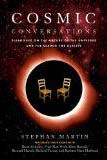
Cosmic Conversations: Dialogues on the Nature of the Universe and the Search for Reality*
Edited by Stephan Martin
As an astronomer I'm used to thinking big, with big ideas about the universe and a big picture of our place in the cosmos, but my vision of the universe suddenly feels tiny once I start talking with Dr. Christopher Bache about what may really be going on. For more than three decades, Bache has investigated the nature of transpersonal reality on the largest scales and the relationship between the individual and that of the universal and the collective. Are we each separate individuals in a vast universe, or is there the universe itself a vast collective consciousness that weaves humanity and all of our experiences together into an inseparable whole? Does humanity have a cosmic role to play in the evolution of the cosmos? Philosophers and mystics have speculated on these ideas throughout history, but few have explored them on with the intensity, rigor, and insight as Bache.
Dr. Christopher Bache has been professor of religious studies at Youngstown State University for more than three decades, where he teaches transpersonal studies, comparative spirituality, consciousness research, and Eastern religions. A pioneer in the study of consciousness, his first book, Lifecycles (Paragon House, 1990), is on reincarnation. His second, Dark Night, Early Dawn: Steps to a Deep Ecology of Mind (SUNY Press, 2000), focuses on the relationship of the individual to the collective from the perspective of non-ordinary states of consciousness.
He is also an adjunct professor in the Philosophy, Cosmology, and Consciousness program at the California Institute of Integral Studies in San Francisco and was Director of Transformative Learning at the Institute of Noetic Sciences in Petaluma, California, for two years. The recipient of many awards for teaching, his latest book The Living Classroom (SUNY Press, 2008), explores the dynamics of collective consciousness in the classroom.
Many of Dr. Bache's insights come from his personal experiences with sacred medicines throughout a 20-year period along with his current practice of Vajrayana Buddhism. His series of intensely transformative and evocative experiences are documented in his book Dark Night, Early Dawn, where he describes encounters with a spiritual reality that is remarkably similar to that described by the mystics of the world's spiritual traditions, as well as by other transpersonal psychologists such as Carl Jung, Ken Wilber, and Stanislav Grof.
Stephan Martin: Could you share something that you've learned from your various experiences about the nature of the universe?
Chris Bache: The primary thing I may have to offer this discussion is a perspective that comes from my work with psychedelics. Because it reflects my individual journey, it may be risky to extrapolate information from it for others, but I take comfort in the broad resonance between my experiences and the hundreds of experiences documented in Stan Grof's work. He opened the door and created the fundamental framework that I've built on. As I've grown older I've been able to look back on this 20-year period of engagement and get a better perspective on it.
SM: What's coming through for you now as you look back on these experiences?
CB: Well, for one thing, perhaps how stupid I was to push as far and as deep as I did, and how much I underestimated the depth of the journey and its cost. [laughs] However, I now appreciate better that each of our journeys into the center of life is a singular journey. At the center of the universe is an infinite consciousness with infinite potential so vast that no one can hold the whole of it. A million individual journeys into the center elicit a million different aspects of infinite consciousness. Anything I have to offer comes from intuitions that have been shaped by my experience of this domain, as well as the guidance that has been given to me along the way by the universe.
SM: Can you say more about the guidance and the perspective that's developed for you based on these insights?
CB: Where to start? One of the recurring themes for me has been the patterns of the soul's development. Imagine a spool of kite string that you're winding round and round. The soul-process of collecting and accumulating experience takes place over hundreds of thousands of years of evolution and reincarnation, and what's being wound around the spool toward the end is some of the most precious stuff in the universe -- human experience. It's very different, for example, than tree experience. As the soul winds more and more experience round itself, the system starts to glow until eventually it ignites. I think that's what the universe has been doing with us for millions of years, spinning us up on the inside, and now we're coming to critical mass.
SM: Your work begins in some sense by pointing out that many individuals have experiences of an expanded reality, whether through dreams, synchronicities, or spiritual and mystical states, that don't easily fit into our culture's modern cosmological worldview. Based on this evidence, your work and the work of others in transpersonal psychology points to a vision of the universe that is much more comprehensive than that described by modern science, one infused with spiritual consciousness, expansive life, and universal intelligence. This sounds in many ways like the accounts of deepest reality described by the world's mystical traditions. Could you say something about this?
CB: That's a good summary of the situation that we're in. I think that the great spiritual masters saw something that is fundamentally true about the universe. Physics in some ways is catching up with parts of their vision. Their fundamental vision is that the universe is alive, with the vast majority of it's aliveness not visible to our naked eye. Think about the recent finding in astronomy that 96 percent of the universe is invisible. We're essentially floating on an ocean of invisible light.
Just as the mystics relate, we're finding that the universe is saturated with layers upon layers of intelligence, and it has plans and strategies which we're just starting to get glimmers of. The genius that surrounds and permeates us has been billions of years in the making, and maybe includes universes that existed before this one. We're just beginning to wake up to the complexity of it all.
The universe is alive and it's spiritual as well as physical. It's exploding all around us, shattering us into bigger and bigger visions and understandings of ourselves. Because our core awareness is rooted in something that is beyond space and time, we can't really die. This part of us was never born -- it just becomes more complex over time.
SM: The astrophysicist Bernard Haisch, who is also included in this book, has theorized that all physical phenomena arise out of the zero-point field, which is essentially a sea of light.
CB: That corresponds with my experience. It's been my experience that in sustained inner work, the universe reveals itself in stages. As my work progressed through the years, deeper layers of the universe showed themselves. In the early stages, the experiences moved beyond the material world into the psychic and soul domain. Then the unfolding continued beyond soul reality into layers of archetypal reality and the deep structures of the subtle realms. Then it continued beyond this to the deity realms, the god realm, and deeper still to the domain of pure light. This light was then refined and purified at deepening levels until it became a field of pure Diamond Consciousness. Beyond all visible light there was a domain where light purified into an energy so refined that it became invisible. Pure invisible potentiality, what some call the Void.
From this perspective, then, there are many layers of reality between the Void and the manifest physical world. That's the way it has appeared to me, at least. It's as if the archetypal realm is like a field of giant trees growing out of this ground of light and pure consciousness, with the tips of their leaves eventually reaching into time and space.
SM: It sounds like this is the underlying field which is giving rise to space, time, and our everyday embodied experience.
CB: I think so. It's exciting that physicists are pointing in this direction with concepts like the quantum field and the zero-point field, which they describe as having the qualities of light and nonlocality. If physics is describing something like this lying at the foundation of physical existence, it is coherent with the vision of reality that surfaces in deep transpersonal experiences.
SM: It's interesting that the universe would use the same dynamics at all these various levels. For me, that's astonishing in itself!
CB: That's when you begin to know you're looking at something really important, when you find it operating at multiple levels -- at the physical, mental, and spiritual levels.
I think this same principle of repetition of design at multiple levels applies to the concept of reincarnation. Reincarnation is simply one instance of a larger pattern in nature -- nature recycling its learning. It builds on itself. The universe recycles everything, including human learning. It's incredibly efficient. You don't need to get too personal about it.
What's exciting is that this continual compounding of experience is building up inside each of us. For this reason alone, I don't think we can stop an awareness of rebirth from eventually rising inside the people. The longer we accumulate life experience, sooner or later we will become aware of this compounding within us. And once people see it, it's going to become obvious that this is simply one more pattern of learning in a self-evolving, self-arising universe, part of evolution's thrust toward greater complexity. I think it's going to become an unstoppable idea in history.
SM: It sounds like this is something that the universe wants us to know. The fact that these kinds of insights are arising all around us seems like part of the universe's self-revelation, it's desire to know itself in a deeper way, to use somewhat anthropic terminology.
CB: Yes. The universe is pouring it's secrets into us every moment. What are we? We are the universe, and the larger universe is downloading as much information into us as we can take in. Every time we have a little deeper insight, it is giving us more information. We are the universe becoming aware of its larger self.
I think that there is much joy in the spiritual domain that humanity is finally getting old enough that we can begin, just begin, to touch the edges of the intelligence that has been birthing us these many billions of years. I think there's tremendous joy, because even if we are just waking up, It knows fully what we are. The image that keeps coming to me is of God holding us as delicately as a mother holds her new baby. But God has to be careful not to touch us too directly, not to allow us to feel His/Her full love for us, because if we felt that great love, the energy would be so strong it would send the baby into paroxysms of pain. The fact is that we're just now getting strong enough to be able to withstand more contact with the Divine Mind without shattering.
SM: It reminds me of the image that we talked about earlier with the cocoon of our essence being wrapped more and more with the kite string of human experience, so that we eventually become stronger and able to embrace more of this reality.
CB: Yes, but how long does it take? This awareness is opening in so many people that I think we are coming to a moment in time where an earlier crop of soul consciousness is beginning to be harvested into something greater. You know, you plant something in the ground and you have to wait months for it to mature. Human experience has been planted in the universe, and the universe has waited 100,000, 200,000 years for it to sprout. Now there seems to be some kind of ripening taking place, some massive underground awakening.
SM: I've heard some people say that more people are waking up these days than at any other point in history.
CB: I agree. I think that there's a quickening or ascending energy rising from the depths so that we are collectively coming to a kind of psychic boiling point. As our collective unconscious comes to a boil, our entire political and social system is going to start to cook ferociously, and all that energy is going to churn each of us at very deep levels. Our collective unconscious is not going to be the quiet partner it has been in the past, but will be much more active and arousing.
SM: It's going to turn up the heat, so to speak.
CB: It's going to turn up the heat, throw us into collective labor, and send us into convulsions that will force us to throw off the past and create a new present. It's going to draw all of us together into a massive realignment, with an accelerated learning curve. It's going to be a near-extinction event, I fear, a massive interruption of life as we know it. Large nation-states and global economies may fragment in this process. I just don't see any other way.
However, I deeply believe that out of this crisis something new and better will arise. We know we have great potential that can rise to great heights when under duress, and I deeply trust the intelligence and wisdom that's carried us 13.7 billion years to where we are today. So if we're coming into global crisis, we must be ready. We may feel stupid and clumsy in the face of all this, but there must be a large enough reservoir inside the human heart to allow us to become more than we were.
SM: I hope there is, and your transcendent vision of the universe sounds like something people need right now, given the current world situation and the kind of guidance that many people are yearning for.
CB: You know, a crisis is the worst time to start looking for a new philosophy. Ideally, you should have your philosophy in place before a crisis hits. It worries me that many people are going into this transformation standing on such weak theological ground. What do they have? Most of our churches are deeply alienated from their time in history.
The knowledge of the natural world is our new religion. It's what we truly believe and trust in. It's where our greatest talent is focused and what our children go to college to learn. I don't think we're going back to the religions of the past, and I don't think we're going to give up science in going forward. What I suspect is going to happen is that we'll bring the deeper spirituality of the old religions forward, but in a post-religious form. We're on the verge of the birth of a new spirituality, which will include science while simultaneously opening more intimately to cosmic and divine genius. The depth of what is alive inside us will sooner or later overtake us.
SM: It sounds like one of the elements of this coming transformation is a shift in authority, where people will no longer derive their knowledge of reality primarily from external sources such as science and religion, but will begin to investigate their own experience directly to see what is true. I wonder if you see this as part of this synthesis of science and religion that is coming?
CB: Yes. And I think our experience is showing us that the inner universe is as "large" as the outer universe is. And this is coming as a big surprise to us; it wasn't supposed to be this way! We thought we could tuck our minds into an envelope the size of our brains, a mental envelope that contained the sum total of our physical senses. What we're finding experientially, however, is very different. Consciousness is vast. And whether it's discovered through meditating on a mountaintop, ingesting psychotropics, or having a near-death experience, in each case you find a vast reality within.
I think a sophisticated version of the perennial philosophy will emerge in a new global form. There will also be an appreciation of the fact that the individual is a fractal being that resonates and vibrates within the larger collective. So as the collective goes through its turning point in history, each one of us goes through our own soul turning point as well. We take our underlying pivot from the larger universe, and our individual transformations simultaneously ripple out into the field of the universe.
I feel very strongly that each of us is connected to specific people through the tissue of time and space. We may not know many of them, but we are connected by threads that run through the hearts and minds of specific persons. Through these specific beings, we are connected to the family of humanity as a whole. When we rise to the challenge of our individual lives, when we do what it is we are here to do, it sends a pulse of light and life along these filaments that nourishes everyone we are connected to and helps them achieve what they are being called to do. Likewise if we fail, it lowers our collective energy. We are truly and deeply all in this together.
How the individual is embedded in the collective and how the collective is nourished by the work of the individual are some of my preoccupations. I'm interested in what happens when a collective system reaches a critical bifurcation point where it becomes nonlinear and more unstable and more subject to change. Systems theory and chaos theory tell us that at these critical points of stress and compression, systems become extremely susceptible to influence. Small influences can have large outcomes. If this is so, then in this time of global crisis, even a small number of people doing the right thing may crystallize a positive outcome for humanity. I believe that these "seed people," persons who have accomplished within themselves what the world is trying to accomplish collectively, are distributed throughout the entire system.
The seeds of the future are already here among us, here in the younger generation, with some working to clear out old ideas from the past and others bringing in new ideas from the future. I personally feel myself to have been more involved with detoxifying and purifying the past than bringing in the future, but when I look around, I see many people who already have new ways of thinking within them, persons whose consciousness is not encumbered with the old patterns. For example, when did you start thinking like this, being interested in the relationship of the individual to the universe?
SM: I think I've been pursuing the questions "What is the universe?" and "What is my role in it and my relationship to it?" for most of my life. These two questions I think drew me initially toward studying science, and later philosophy and consciousness studies, and they have been with me ever since in subtle and not so subtle ways.
CB: Yes, and if you are asking these questions, then there are lots of other fractal forms of "you" asking them as well. And if you can answer them, then it will help all of us answer them. Your insights, whether expressed publicly, physically, or even psychically are shared instantaneously with everyone else who is asking these kinds of questions, like interconnected neurons in an enormous brain.
SM: I like the image of neurons that you use, because if we're all elements in a larger global brain then it seems that not all of the neurons have to have to wake up individually for there to be a cascading change of awareness in the brain itself.
CB: Yes, you only need to hit the critical mass to begin the cascade.
SM: A related concept to what we've been discussing is the idea in your work of a universal field of consciousness that includes and yet transcends the physical universe. So the deeper nature of the universe is like that of a single integrated living organism, a field of experience that remembers, learns and grows from the experiences of many individuals over many lifetimes. Can you say more about your insights and perspective on this?
CB: In so many ways and in so many different cultures throughout history, people have talked about the universe as being alive, as being a single great living organism. This becomes especially apparent in non-ordinary states of consciousness, where one sees that the universe is alive on more levels than we had previously imagined. But staying just with our scientific knowledge, our understanding of the universe has grown to the point that we can reconstruct the general sequence of events that produced us step by step through 13.7 billions years of evolution. If we study this chain of events carefully, sooner or later we are brought to our knees, struck dumb by the sheer intelligence and genius of the physical universe. Then we have to consider the genius of whatever it was that birthed the physical universe in that fireball of unimaginable creativity we call the Big Bang.
I think our scientific knowledge has exploded so fast these past three centuries that it has left all our gods in the dust, every one of them, and they're still panting to catch up. Now we need an understanding of God that is at least as big as the universe that science is showing us. Historically, our concept of God has always been proportionate to our knowledge of the universe. We are now living intellectually in a universe many orders of magnitude larger and more complex than the universe we previously lived in.
SM: So it seems like the two go together, so that with each revolution in knowledge, our images of both God and the universe shatter together.
CB: Yes. We've reached a point where science is our culture's true religion. And just as we've reached this point -- being the most educated, most knowledgeable, most organized human beings ever to exist on the planet -- we're about to be put through a meat grinder! We're going to be put through an ordeal of such magnitude that it will change us forever. Once we pass through this ordeal, we will be different people from who we are now. We will find that we are living with a different standard of "common sense," a different level of compassion, and a different set of rules for life. People will overcome their surface political differences in the interest of mutual support and common survival. From this process a new human will emerge -- and much more quickly than we would have expected. I think the prototype of this emerging human is found in the great saints and geniuses of history.
This new human will mark a new plateau of human evolution -- a radical discontinuity from the old. I think that many people are intuiting and feeling this shift from different perspectives and are using the language that's available to them to describe it. That's what I'm doing. I come out of religious studies and psychedelic research, and so I'm using that language to give voice to something that others are trying to express in other ways.
All the components of what is emerging are within us now, and, surprisingly, I feel that most of the work that's needed for this transition is already done. The work has been done over countless millennia by the slow, patient process of evolutionary reincarnation, strengthening individuals and bringing us to where we are now.
Bringing the system to critical mass is like a small bomb sitting on top of a big bomb. The big bomb is all the knowledge and experience and qualities of soul that have been gathered over time, and this is what's going to be pressurized by this critical time. The foundation for the radical change that is now upon us has been laid by all the experiences over hundreds of thousands of years that each one of us is carrying.
It's exciting to me that many people today are having similar visions of something large coming. I personally feel the need to think and talk with other people about the nature of this future human. The more clearly we see what's coming, the easier it will be to understand the gravity of what we're dealing with right now. I believe what's coming is the most extraordinary form of human being, a human being that has qualities very different from those that dominate us now. It's like we're all homo erectus sitting around watching homo sapiens emerge -- it's that big an event. Nine months of gestation and one day of labor. The long gestation has already taken place, and this is the day of labor.
We can't fully see what we're becoming. I was talking with Pete [Russell] the other day and he observed that everything is accelerating so fast that we can't plan even 10 or 20 years out at this point. It's truly an intense time.
SM: And our inability to plan in such a rapidly transforming world is such a break with the rational mind that wants to predict the future in a linear way based on the past.
CB: Absolutely. The ground comes out from under our feet and we go into a free-fall.
In some ways -- and this is going to sound strange -- it's been healing to have all of this finally begin, because it's been crazy-making to have had the experience that it did happen -- to have touched that future time when it has already happened -- and then to come back and live the last 10 or 15 years leading up to this transition. Most of the world around you is saying that this is not going to happen, that it's not real, but deep down you know that it is real. It's not that I would wish this pain on anyone, but when people start to be aware that it's actually happening, it removes some of the dissonance for me.
SM: I wonder if there's something about the collectivity of the suffering and the transformation that can help here as well, to see that we're not each going through this process alone as separate individuals.
CB: I think we can really open up to that if we become sensitive enough to listen to the very back of our minds. If you listen very carefully, you can hear the suffering of all the world's poor inside you. They're all there because, really, there is only one mind. If the world starts to change, if we genuinely start to take care of the world's poor, putting them to bed every night with a full stomach, then we won't be hearing them suffering in the back of our minds every night. We'll have a different feeling as our baseline.
When we truly begin to understand that we're all in this together, we'll begin to recognize that the quality of our lives and our individual well-being rests upon the quality of life around the planet. A new common sense will become the norm, in the same way that democracy became a new standard in the world after centuries of monarchy. A new way of thinking will come forward.
SM: This inner transformation that's happening now is going to ignite a fire in our culture, and vice-versa. They affect each other and are interdependent.
CB: Yes, we're going through the inner fire and the outer fire together -- they are two sides of the same fire. The next book I want to write is a fresh look at reincarnation, because the academic community is so far behind the curve on this point. I want to take the discussion of rebirth to the next level. Given the high caliber of the evidence that exists today for reincarnation, we need to ponder more deeply the implications of living in a universe that is perpetually gathering more and more experience to itself over time.
It won't be long before we'll be able to step back and appreciate what's been accomplished through this historical crisis and what we've gained from it. I really do believe that once we begin to experience the new human that's coming forward, we will retroactively understand the significance of what we've been going through. Right now we don't have a clue, and it scares us.
We may not see how all the pieces fit together yet, but we can all feel that we're on the edge of something big. When we can't ignore each other and we can't convert each other, we're going to be rammed together, and out of this convergence something profound will emerge. I like to remind my students that out of all the possible combinations their soul-stream might have brought forward from thousands of years of rebirth, they were chosen to be in the ringside seat at this critical time in history. It's quite an honor and quite a responsibility.
SM: And our soul chose not only here and now in this time, but in these very circumstances.
CB: Yes, everyone's soul did! In my journey work, the universe sometimes gave me mantras to work with, and one was: "Every being is perfect and deserves my complete respect." Each one us is a warrior. You don't get to enter time and space without making certain commitments. People may not remember doing so, it may be buried deep inside us, but just to be here is a remarkable accomplishment in itself and quite a privilege.
And reincarnation keeps diversifying and drawing us out -- there's no box or packaging that we as humans can stay in. Interracial marriages, intergender relationships, interfaith partnerships -- the combinations are exploding.
In the years since I've come back from these journeys, it gives me great peace to carry a larger vision of what's happening to us and where we're going. I sometimes get overwhelmed by all the suffering, as many of us do. I have to deal with dark days, knowing that this transformation is coming and the magnitude of what it will involve, but I find stability in the larger vision of what's being birthed through this suffering. To hold all of it in my heart, it helps to know its purpose. It truly does change a day of mere pain into a day of labor. Working with psychedelics has given me a certain perspective on the wave of transformation that's crashing down on us, but in the end, we'll all be tumbling through it together. As the wave rolls over us, it will be confusing and hard as hell.
SM: It seems that even advance knowledge of the wave coming doesn't spare you from having to go through its crashing down any less.
CB: Yes, and it is a time of great leaders and lots of them. We'll need millions of people stepping forward, and I believe that they're here. I don't know what will become of the vast reservoirs of hate that are burning like oil fires in different parts of the world. I don't know how we're going to handle the enormous mountains of injustice that divide the haves and the have-nots of the world. I don't know how we're going to bring about a fair and just economy. I can't imagine how we're going to do these things.
What I keep coming back to is the visionary experience that I laid out in Dark Night, Early Dawn -- that just when we thought everything was lost, the storm passes and there are survivors. When we reconnect after the catastrophe, we find a new beginning dawning around us, reflecting new values that we forged within ourselves during the crisis. In that process we rise to a level of self-realization that's extraordinary. We let go of our past in a way that takes us into a new maturity. Our hearts hurt so much that they tear open, allowing us to see into time and across borders in a new way. There's a period of grace, repentance, and stepping into a new reality.
From a deeper spiritual perspective, I think we're going to empty the bardo, clearing out the soul-baggage of our fragmented past. When this happens, there will be greater transparency between the world of spirit and the world of embodiment. The collective human minefield will become clearer, more coherent, and less fractured by the distortions of our history reverberating in the bardo-field. That was Robert Monroe's vision of a possible future in Far Journeys. When he went into a time about 1,500 years into the future, he saw a future without the bardo. I think that's a very powerful vision, because it represents a radical maturing of humanity. We won't need those levels of the bardo anymore because we won't be as limited as we were when we generated them.
SM: It's like a shell that we sloughed off.
CB: Yes. We'll finally integrate all the pieces of our lives. The universe is all energy, and the bardo is filled with the energy of living soul-fragments. We'll integrate that energy so that it's all within us now. It's a time of soul-retrieval, where we're pulling all this energy back into us. It's like a vast cloud precipitating big water drops, with people incarnating more and more of their history into themselves until eventually they become whole and clear.
I really think this is the crash and burn century. How long will it take before we turn it around? Will it have bottomed out by the end of the twenty-first century? Will we have made the pivot? However long it takes, when we start to come out of it, we will be completely changed from what we were at the beginning of the descent. In that freefall of history, that's when the compression is going to hit.
SM: And from a big-picture perspective all the time it takes to do this is just a flash in the pan. If the universe is anything, it's patient, so it will take as long as it needs to. Maybe this is an ongoing cosmic process so maybe it will happen again and again, ad infinitum...
CB: Yes. The universe thinks in a time frame that boggles the imagination. A million years here and a million years there, that's ok. Have they got it yet? I'll be back in a few million years! [laughs] Maybe for this new being to come forward, it will take several contractions. We just don't know. I'm hoping for a quick resolution, for an intense, short labor, but you never know.
None of us knows what it's going to be like when a whole planet goes into crisis. A storm or a war can throw us into crisis, but a whole planet going into crisis at the same time, all wired with the Internet and television? -- it's never happened before. It's a one-of-a-kind event, and so we should expect a one-of-a-kind outcome. If we embrace change, we will move through it more smoothly. If you know you're going into whitewater, you can prepare for it. Let life change you.
I'm afraid where I live, people are buying guns. They're scared. The churches are still preaching a philosophy of theological self-isolation. Clearly we're not awakened yet. We're sleepy, in a daze, mesmerized by malls and television, thinking we can still hold on to the old order.
SM: Can you talk about what's needed in our culture to support this transformation?
CB: There is no one answer to that question. I think we each need to focus on the part that is ours to do. This is our collective task and how we will move through it. The part that interests me personally is exploring the possibilities that can come from the skillful integration of psychedelics into philosophy. I think this represents a turning point of great significance, a new way of doing philosophy -- by systematically reflecting on deliberately induced non-ordinary states of consciousness. We haven't done this before, not since the ancient Greeks. The vision that emerges from entering into this deeper communion with the universe looks at historical events from a deeper perspective, looks at time and space from a spiritual perspective. To order this book from Amazon.com, click here!
When all is said and done, what psychedelics is giving us, I think, is the opportunity to deepen our experience of the universe's experience of itself. To be able to actually experience how the universe experiences itself beyond us. Intellectually, we're seeing the universe and understanding it through mathematics and physics and the other sciences, but with these medicines we can actually experience how the universe experiences itself. Our capacity for doing this is expanding exponentially at the same time that our understanding of physics is expanding exponentially.
To actually experience the genius of the universe, to feel its depth, scope, and richness, answers many questions, and these answers do not conflict with scientific knowledge. The resurgence of psychedelics is one more lightning bolt hitting us as the pace of change accelerates. There's no way that we can continue to keep this experience from the people.
There are hard times ahead and there are great times ahead. Everybody wants their life to count for something as part of a larger order. The birth of a new humanity is as good a larger cause as any I've seen. That's an event I want to be a part of!
*This excerpt from Cosmic Conversations reprinted by permission of New Page Books. Copyright 2009, All Rights Reserved